
Designing a 4-20mA analog output board to let a client's control system drive industrial actuators
Challenge
Having already brought gas-sensor readings onto their platform, the same client needed the other half of the loop: a way to act on that data by driving standard 4-20mA industrial actuators, valves, or remote indicators from their control system, without designing and validating a second, output-side analog front end of their own.
Solution
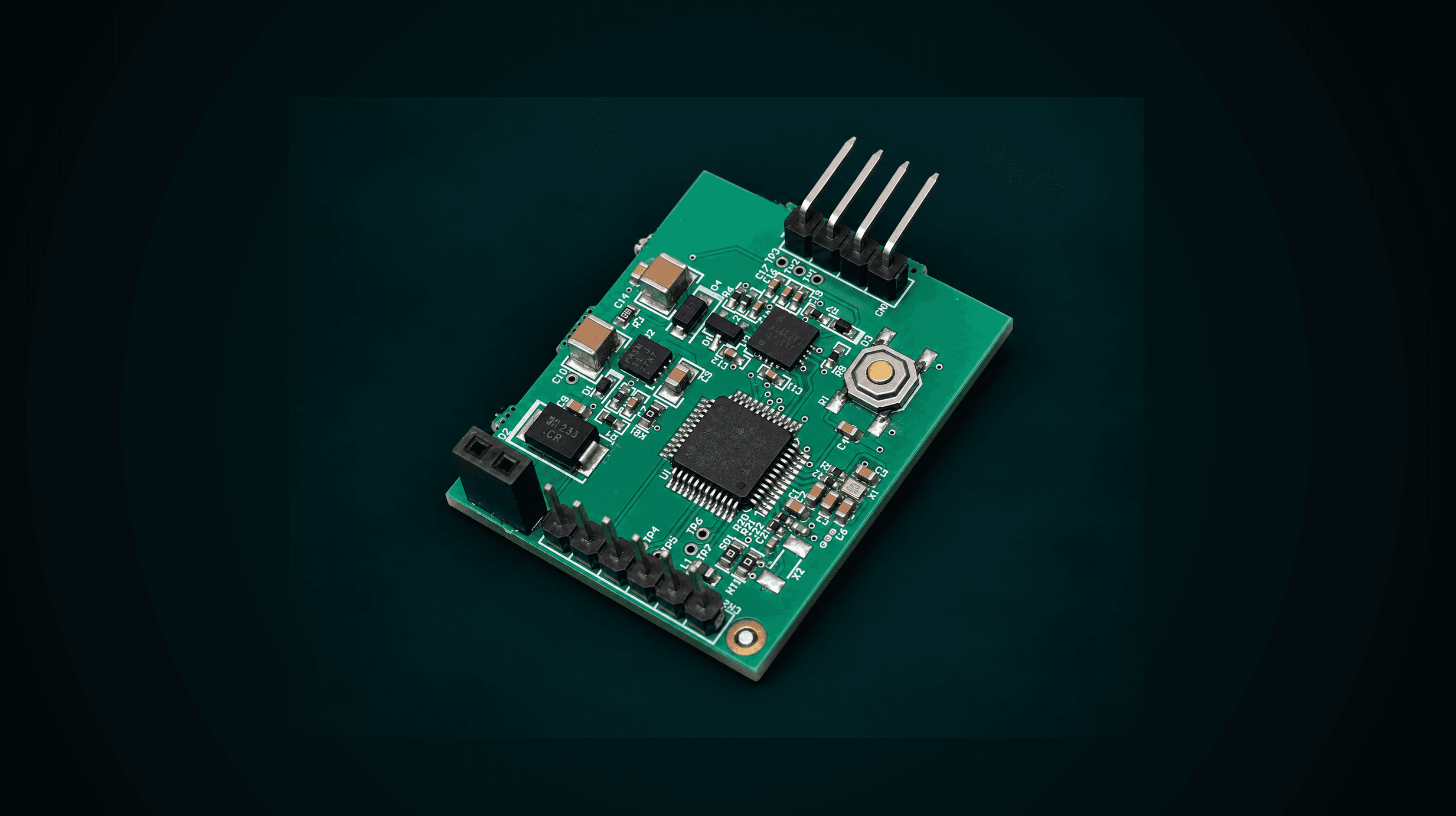
We designed a companion analog output board built around a 16-bit DAC from Texas Instruments driving four independent 4-20mA current-loop output channels, so the client's system can command up to four industrial actuators, indicators, or annunciators simultaneously with the same signaling precision as the sensor side. An STM32C031C6T6 microcontroller - the same part used on the matching input board - takes channel commands over I2C from the client's master controller and drives the DAC accordingly, so a single, already-proven communication pattern covers both reading sensors and driving outputs. We laid the board out in Altium Designer to the same compact, self-contained module format as its input-board counterpart, with clearly labeled output channels and a dedicated connector footprint, so the two boards drop into the client's enclosure as a matched pair rather than two separately engineered one-offs.
Results
The result is a matched input/output current-loop interface pair built on one shared design language: the same MCU, the same I2C integration pattern, and the same Altium-designed form factor, so the client's engineering team learned one integration pattern once and reused it on both sides of their system. Their control platform can now both read industrial 4-20mA sensors and drive industrial 4-20mA actuators without owning either analog front end, keeping their own engineering effort focused on the decision logic in between.
Kick-start your project
Get in touch with our team to discuss your business needs and see how we can help with a project like this one.